
Wondering Aloud: Philosophy With Young People
The World But Seems To BeThe world but seems to beyet is nothing morethan a line drawnbetween light and shadow.Decipher the messageof this dream-scriptand learn to distinguish timefrom Eternity. — Fakhruddin ‘Iraqi (Fakhr al-din Ibrahim) English translation by William Chittick and Peter Lamborn Wilson
This week I watched Forgiving Dr. Mengele, an interesting and provocative film about the life of Eva Mozes Kor. Eva and her sister Miriam were among the many sets of twins who were victims of Josef Mengele’s horrific twin experiments in the Auschwitz concentration camp. They arrived at Auschwitz when they were nine years old, […]
I spent the morning last Friday with two eighth grade classes in the first sessions of a unit I teach every year on “Moral Philosophy and the Holocaust.” I teach the unit with Jane Orme, the eighth grade language arts teacher at Liberty Bell Junior High School, and over the past four years we have […]
This week in the 5th grade the students and I talked about whether the universe began at some point or has always existed. This is often a somewhat delicate discussion, because it can easily slide into religion and raise what especially in public schools can be thorny issues. But in this conversation, the students quickly […]
In an earlier post, I wrote about an ethical dilemma that some of the fifth grade students with whom I’ve been working were facing regarding the upcoming Science Fair. The students told me today that they had decided that the experiment they had been considering was too fraught with ethical problems for them to be […]
Between What I See and What I Say. . .for Roman Jakobson 1Between what I see and what I say,between what I say and what I keep silent,between what I keep silent and what I dream,between what I dream and what I forget:poetry.It slipsbetween yes and no,sayswhat I keep silent,keeps silentwhat I say,dreamswhat I forget.It […]
The Hundred Dresses by Eleanor Estes (1944) is a great book to inspire discussions about the nature of friendship, the ethics of being a bystander, and questions about what moral duties we owe to others. I have used this book with students from ages 8-18, usually taking three or four classes to read it together […]
People often ask me about finding philosophy resources online. There is now a multiplicity of online resources available for free — online philosophy classes, lectures, materials, etc. This is a sampling: http://www.epistemelinks.com/index.aspx (thousands of links to philosophy audio and video, course materials and other philosophy resources) http://broodsphilosophy.wordpress.com/2006/06/15/online-videos-of-philosophical-lectures/ (list of online videos of various philosophy lectures) […]
Yesterday I showed up in the fifth grade classroom in which I’ve been teaching, prepared to talk with the students about whether you can get something form nothing, whether everything has a beginning, and related questions. When I arrived, the class informed me that they had just had a discussion about an ethical problem related […]
On Tuesday, the fifth grade students with whom I’ve been doing philosophy and I spent about 40 minutes talking about dreaming. We started with the students’ questions, which included: What is a dream? Can dreams affect your everyday life? How do dreams work? Why do we dream? How do we know we’re not dreaming right […]
On Friday I had a marvelous discussion with a group of students in an eighth grade English class about The Book Thief, a novel by Markus Zusak. The story is told from the perspective of Death, who describes his experiences during the Holocaust, and in particular the story of a young girl living near Munich. […]
The House in WinterHere,in the year’s late tidewash,a corner cupboard suddenly waversin low-flung sunlight,cupboard never quite visible before. Its jarsof last summer’s peacheshave come into their native gold—not the sweetness of last summer,but today’s,fresh from the tree of winter.The mouth swallows peach, and says gold. Though they dazzle and are gone,the halves of fruit, the […]
When, in our first class together, I asked the fifth grade students with whom I’m doing philosophy this winter what they imagined was the definition of philosophy, one student volunteered that he thought philosophy was “a way of life.” Of course, I loved the sophistication of this answer, and there are philosophers who hold this […]
The fifth grade class I’m working with had a wonderful discussion this week about the mind. We talked about what the mind is, whether it is the same thing as the brain, and, if not, what it might be. We began with the students asking various questions, including: What’s the difference between the mind and […]
After 13 years of working in this field, I continue to analyze the most effective ways to make philosophy a more common offering in K-12 schools. Working with teachers to help them to develop the skills necessary to teach philosophy is the most obvious way to make a large impact, but my experience has convinced […]
This week I started a series of philosophy sessions with a fifth grade class. This was a first introduction to philosophy for this group of students. I started by asking them if they had any idea what philosophy was. We talked about that for a few minutes. I described some of the questions I associate […]
I love Thomas Nagel’s short 1987 book What Does It All Mean? It’s a really accessible introduction to philosophy for high school students and up, and it captures much of what drew me to philosophy in the first place. The book focuses on some of the philosophical problems that, as Nagel notes, “reflective human minds […]
One of my favorite children’s books to use in philosophy classes (including with high school students) is William Steig’s Yellow and Pink. The story begins with two small wooden figures, one pink and one yellow, who are lying on old newspaper. The yellow one sits up and asks the pink one, “Do you happen to […]
The Snow Man One must have a mind of winterTo regard the frost and the boughsOf the pine-trees crusted with snow; And have been cold a long timeTo behold the junipers shagged with ice,The spruces rough in the distant glitter Of the January sun; and not to thinkOf any misery in the sound of the […]
A couple of years ago I created a series of ethics puzzles to introduce various moral questions to two fourth grade classes. I adapted some of these scenarios from puzzles created by others and made up the rest. I found that formulating dilemmas that would be easily recognizable to ten-year-old students was an effective way […]
“Long ago there were no colors in the world at all. Almost everything was grey, and what was not grey was black or white. It was a time that was called The Great Greyness.” The Great Blueness and Other Predicaments is a story by Arnold Lobel about a wizard who introduces color into the world, […]
Just Delicate NeedlesIt’s so delicate, the light.And there’s so little of it. The darkis huge.Just delicate needles, the light,in an endless night.And it has such a long way to gothrough such desolate space.So let’s be gentle with it.Cherish it.So it will come again in the morning.We hope. — Rolf JacobsenTranslated from the Norwegian by Robert […]
This will be the final post in this series. What is music?Is there some quality that anything considered music must have?Can any sound count as music?Does all music express emotion?Is the emotion that music expresses in the music itself? In the composer? In us, the listeners?What makes music pleasurable to listen to?Why do we listen […]
In the two sixth grade classrooms in which I’ve been teaching this aesthetics unit, the students and I spent a lot of time this week talking about the relationship between having feelings and expressing feelings. We read another portion of chapter 14 in Mat Lipman’s Harry Stottlemeir’s Discovery, in which two girls have a conversation […]
My November Guest My Sorrow, when she’s here with me,Thinks these dark days of autumn rainAre beautiful as days can be;She loves the bare, the withered tree;She walks the sodden pasture lane. Her pleasure will not let me stay.She talks and I am fain to list:She’s glad the birds are gone away,She’s glad her simple […]
This week the sixth graders and I read part of a chapter from Harry Stottlemeir’s Discovery (by Matthew Lipman, part of the curriculum developed by the Institute for the Advancement of Philosophy for Children in New Jersey), which involves two girls visiting an art museum together and talking as they wander around. The chapter raises […]
I decided that the second class of the philosophy of art series should involve actually looking at visual art and talking about it. I thought about taking the students to a local art gallery, and then decided that it would be fun for them instead to visit our local junior/senior high school (where they will […]
I’m going to write a series of posts about the philosophy of art unit I’m doing with sixth grade students this fall. Yesterday was the first session of the unit. We started by listing some of the things the students said they would consider art, which included paintings, sculpture, music, and poetry and also rocks, […]
October 1 Catharine MacKinnon (American, born 1946) October 4 Richard Rorty (American, born 1931) October 14 Hannah Arendt (German, born 1906) October 15 Friedrich Nietzsche (German, born 1844) and Michel Foucault (French, born 1926) October 18 Henri Bergson (French, born 1859) October 20 John Dewey (American, born 1859) October 29 A. J. Ayer (British, born […]
The Moral Sense Test is a Harvard University web-based study into the nature of moral judgments. The test is a series of moral dilemmas that purport to analyze the psychology behind our moral judgments. The site notes that the study “has been designed for all humans who are curious about that puzzling little word ‘ought’ […]
The Ursula LeGuin short story The Ones Who Walk Away from Omelas is a powerful story for discussing with high school students utilitarian ethics and the question of whether the suffering of one person is permissible if it brings about the greater good. The story is set in a joyful and seemingly perfect city, where […]
A good resource for thinking about what questions to ask when talking to students about philosophy is Philosophy Talk, a weekly one-hour radio series exploring issues of philosophy. Calling itself “the program that questions everything . . . except your intelligence,” the series is very engaging and most past shows can be downloaded online. I […]
If we did not die, if our existence did not unravel in the endless darkness of death, would life be quite so precious, so extraordinary, so moving? Andre Comte-Sponville,Professor of Philosophy at the Sorbonne Whenever I ask students what they think are the most fundamental questions of human life, always on the list is some […]
“. . . That slight uncertaintywhich makes us sure.” From Advice from the Museby Richard Wilbur The start of the school year and planning for the year’s philosophy classes. Usually I start my philosophy classes by asking students to offer some possible answers to the question, “What is philosophy?” (Of course there is no incontestable […]
“There once was a boy named Nikolai who sometimes felt uncertain about the right way to act. ‘I want to be a good person,’ he told his friends. ‘But I don’t always know the best way to do that.’” From The Three Questionsby Jon J. Muth Muth takes Leo Tolstoy’s short story, The Three Questions, […]
I’m often asked how the center got started and about ways to get into schools to do philosophy with young people. I decided to start the center when I was about to finish my Ph.D. in 1996. I had become interested in working with pre-college students, and a non-profit center seemed to me the best […]
Pen and inkdrawingby Mollie Hunt8th grade student Winthrop, WA, 2008 I grew up in the shadow of the Holocaust, learning about the horror of it as an elementary school child, experiencing recurrent childhood nightmares about the Nazis. For years I stayed away from the subject, avoiding books and films that dealt with it. After the […]
When I was a graduate student in philosophy, I sometimes thought that the initial wonder and enthusiasm that drew me to philosophy as a high school student was in danger of being eclipsed by the pressure I was feeling to show how philosophically sophisticated I was. I loved the rigor and depth of the work […]
Among twenty snowy mountains,The only moving thingWas the eye of the blackbird.I was of three minds,Like a treeIn which there are three blackbirds. . . . From Thirteen Ways of Looking at a Blackbird by Wallace Stevens Over the past six years I have taught philosophy to the same general group of children, starting in […]
At the end of our philosophy sessions together this year, I asked the 5th grade students with whom I’d been working what questions they’d like to keep talking about. I loved their questions. Here are some of them: Why are we here? Why am I me? Why do we have philosophy? What is art? How […]
“The orgin of philosophy is wonder.”Plato, Theaetetus When I tell people I spend a lot of my time in K-12 classrooms doing philosophy with young people, often I’m met with a somewhat skeptical response. How do you teach philosophy to children? What philosophy do you teach them? Is this religious? Are children really able to […]
Around the age of four most children start asking the “why” questions. Why do things have to be fair? Why do we have to die? Why is blue a color? Why do we have minds? The beginning of intellectual curiosity. Children generally have no idea that they are joining a dialogue that has been going […]
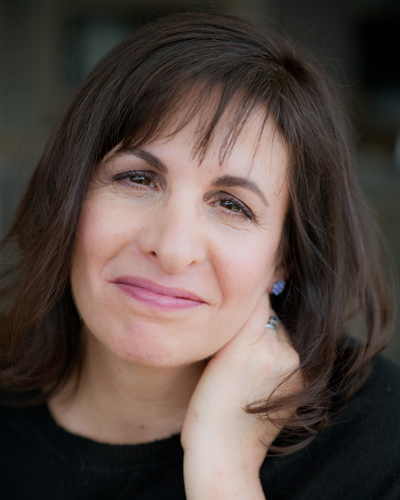 Jana Mohr Lone is the director and founder of the University of Washington Center for Philosophy for Children, an academic research center dedicated to research and practice in philosophy for children and philosophy of childhood, and she is an Affiliate Associate Professor of Philosophy at the University of Washington. Jana is the author of Seen and Not Heard (2021) and The Philosophical Child (2012). She co-authored the textbook Philosophy in Education: Questioning and Dialogue in Schools (2016) and co-edited the collection of essays Philosophy and Education: Introducing Philosophy to Young People (2012). Since 1995 she has taught philosophy in classrooms from preschool to college and beyond. A frequent writer and speaker about precollege philosophy, Jana is the founding president of PLATO (Philosophy Learning and Teaching Organization) and the founding editor-in-chief of the journal Questions: Philosophy for Young People. Follow her on Twitter: @JanaMohrLone