
Wondering Aloud: Philosophy With Young People
Last week I was in a fourth grade classroom and we read the story The Invisible Boy by Trudy Ludwig, a picture book I’ve written about previously in this blog. We started our discussion with a question asked by one of the students about why Brian thought he was invisible. This students wondered whether Brian should […]
I decided to write about another of Arnold Lobels’ Frog and Toad stories today. Along with being joyful and charming, Lobel’s work is, in my estimation, among the most deeply philosophical of any children’s book author. In “Alone,” a story in Days With Frog and Toad, Toad shows up at Frog’s house to find a note on Frog’s […]
The “Blind Painter” activity, created by my colleague David Shapiro, is a creative and engaging exercise that always inspires a lively conversation and is a great tool for building community. The activity focuses on two key skills, both important for doing philosophy — clear communication and active listening. When we do philosophy, it’s very important that we learn to […]
In the book I’m currently writing, I have been working on a chapter about children’s particular strengths. Our society generally has such a deficit view of childhood, but children also exhibit abilities that adults often strive to recapture. To point out a few examples, children tend to have a strong sense of wonder, vibrant imaginative capacities, […]
Last month I had a conversation with a group of fifth grade students about the differences between children and adults, including whether they would prefer to be children or adults. We began with the students discussing what they saw as the main differences between being a child and being an adult.The children contended that children, […]
“Books! And cleverness! There are more important things – friendship and bravery . . .” Hermione, age 11 From Harry Potter and the Sorcerer’s Stone by J.K. Rowling Learning to make friends and figuring out what friendship involves is a significant part of the work of children, and once they enter school they spend more […]
“The Garden” in Frog and Toad Together is another of Arnold Lobel’s delightful stories about the friends Frog and Toad, and one that is perfect for the early spring, which we’re experiencing in Seattle this month, with the cherry trees in full blossom.When Toad sees Frog’s beautiful garden, Toad decides that he too would like to […]
A recent article described the ways in which many cities are not child-friendly, examining some of the possibilities for designing cities around urban children and their needs and desires. It led me to think about ways to engage children in thinking about their environments and imagining the elements of what would be in their views […]
From an editorial in the Wall Street Journal yesterday entitled “Our Childish Gun Debate,” by William McGurn: Quick show of hands for those with children: How many of you look to your teens for political wisdom, whether it’s the daughter obsessing over her Snapchat streaks or the son who would spend his day eating Doritos […]
I am working on a new book, Seen and Not Heard, which will be published by Rowman & Littlefield next year. The book considers the ways in which children, with a particular focus on children ages 5-12, are often not listened to, not take seriously, because of their status as children, and how life might be different if this […]
The traditional model for philosophy sessions in schools involves verbal communication, typically in the form of large group conversations, often in a circle. While this method of leading philosophy sessions has much to offer, not every student is immediately comfortable with this approach. The larger the class size, for example, the more challenging this model […]
Last week I led two end-of-the-year philosophy sessions. One of the activities I like to do as a last session for the year is a prompt that encourages students to think about what is required for something to count as a dessert. It’s fun, and also is a reminder that philosophical questions can be found […]
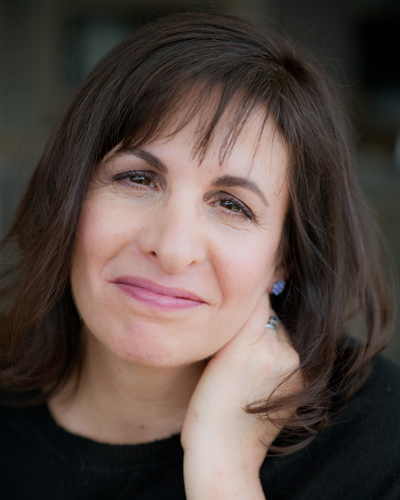 Jana Mohr Lone is the director and founder of the University of Washington Center for Philosophy for Children, an academic research center dedicated to research and practice in philosophy for children and philosophy of childhood, and she is an Affiliate Associate Professor of Philosophy at the University of Washington. Jana is the author of Seen and Not Heard (2021) and The Philosophical Child (2012). She co-authored the textbook Philosophy in Education: Questioning and Dialogue in Schools (2016) and co-edited the collection of essays Philosophy and Education: Introducing Philosophy to Young People (2012). Since 1995 she has taught philosophy in classrooms from preschool to college and beyond. A frequent writer and speaker about precollege philosophy, Jana is the founding president of PLATO (Philosophy Learning and Teaching Organization) and the founding editor-in-chief of the journal Questions: Philosophy for Young People. Follow her on Twitter: @JanaMohrLone