
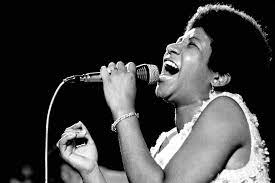
Recently I led discussions with two different classes of fourth and fifth grade students about the meaning of respect. We began each session by talking about what makes us feel respected. Common responses from the students included “when people listen to me,” “when people pay attention to me,” and “when people accept me for who I am.”
We then watched a video of Aretha Franklin and her backup singers performing live in 1968 the song, written by Otis Redding. Using a lesson plan developed by UW graduate student Jack Flesher, we discussed the performance and the meaning of respect.
Students had lots of questions about the relationship between respect and kindness. Is an act of respect always an act of kindness? Can we be respectful and not kind? Or kind and not respectful?
We also talked about whether we show the same people more or less respect depending on context (such as a person who is performing on a stage versus the same person walking down the street). Was this performance particularly powerful because it showcases a Black woman demanding respect during the civil rights struggle?
We discussed how sometimes self-respect can lead to you being perceived as disrespectful to others — when you decide that you don’t feel right about doing something, for example, that someone in authority is telling you to do. Students observed that at times exhibiting self-respect — for instance, clearly expressing a need or want — can lead to being characterized as selfish or self-involved. What is the relationship between self-respect and respect for others?
As is often the case, I came away from these discussions with a lot of new questions!
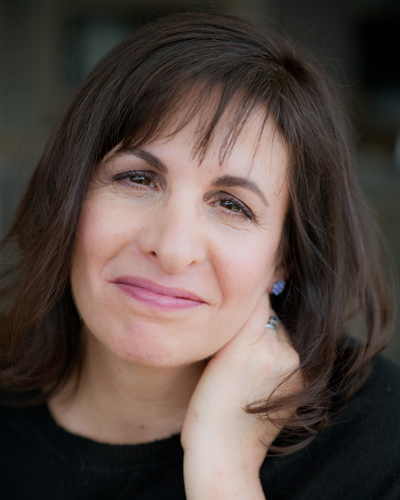 Jana Mohr Lone is the director and founder of the University of Washington Center for Philosophy for Children, an academic research center dedicated to research and practice in philosophy for children and philosophy of childhood, and she is an Affiliate Associate Professor of Philosophy at the University of Washington. Jana is the author of Seen and Not Heard (2021) and The Philosophical Child (2012). She co-authored the textbook Philosophy in Education: Questioning and Dialogue in Schools (2016) and co-edited the collection of essays Philosophy and Education: Introducing Philosophy to Young People (2012). Since 1995 she has taught philosophy in classrooms from preschool to college and beyond. A frequent writer and speaker about precollege philosophy, Jana is the founding president of PLATO (Philosophy Learning and Teaching Organization) and the founding editor-in-chief of the journal Questions: Philosophy for Young People. Follow her on Twitter: @JanaMohrLone