

In a discussion yesterday with a group of eight- and nine-year-old children, we talked about what is most important for our identities; in other words, what could we not lose without ceasing to be ourselves? During the conversation, we began talking about the role of memory in making us the people we are. One child observed that “memory is what keeps us holding all our experiences over time,” and another child commented that without memories your experiences wouldn’t be meaningful. We began talking about whether remembering one’s experiences were as important as having them.
This led to a conversation about the nature of memory. One child said that we think of memory as “seeing things” and recalling images, but that memory is more than that, and includes scent and touch and sound. This prompted another child to ask, “But what exactly is memory?”
Neuroscientists and cognitive psychologists seek to explain the way memory works by investigating processes that take place in the brain. But I think these children were asking a more philosophical question, about the relationships between memory and what makes us who we are and gives us a foundation for finding meaning in life.
A couple of interesting prompts for a philosophical inquiry regarding the nature of memory are the film “Inside Out,” which explores the connections between memory and emotion, and the picture book Wilfrid Gordon McDonald Partridge by Mem Fox, which examines what it might be like if you couldn’t remember and whether objects can help us recover memories. A nice video features Bradley Whitford reading the story aloud.
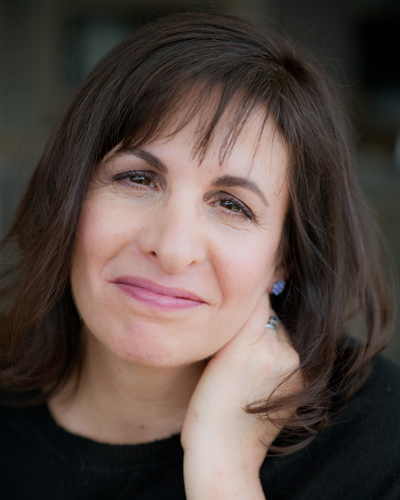 Jana Mohr Lone is the director and founder of the University of Washington Center for Philosophy for Children, an academic research center dedicated to research and practice in philosophy for children and philosophy of childhood, and she is an Affiliate Associate Professor of Philosophy at the University of Washington. Jana is the author of Seen and Not Heard (2021) and The Philosophical Child (2012). She co-authored the textbook Philosophy in Education: Questioning and Dialogue in Schools (2016) and co-edited the collection of essays Philosophy and Education: Introducing Philosophy to Young People (2012). Since 1995 she has taught philosophy in classrooms from preschool to college and beyond. A frequent writer and speaker about precollege philosophy, Jana is the founding president of PLATO (Philosophy Learning and Teaching Organization) and the founding editor-in-chief of the journal Questions: Philosophy for Young People. Follow her on Twitter: @JanaMohrLone