
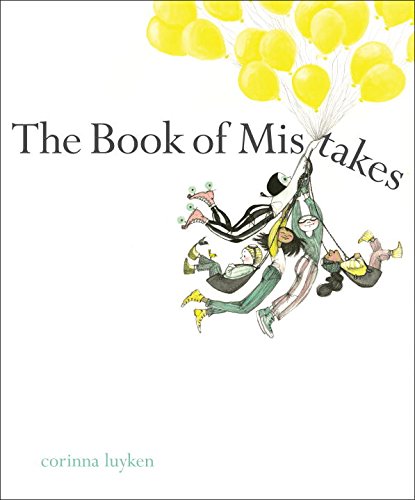
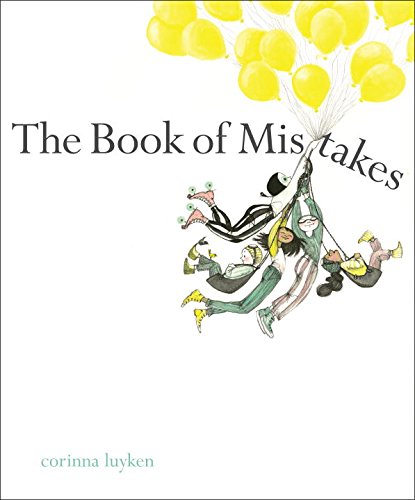
The Book of Mistakes is a first book by Corinna Luyken. I knew Corinna when we both lived in the Methow Valley, in the north central part of Washington State, some years ago. The book is about the way mistakes can lead to creative and novel ideas, and how they can provide a source for new ways of understanding the world and ourselves.
The book begins with one mistake.


Full of charming illustrations, the story goes on to demonstrate how “mistakes” can end up producing new ideas, ideas that would not have emerged without the mistakes.
I introduced the story last week in a fifth grade class at John Muir Elementary School in which I have been doing philosophy each week this year. I chose this book because earlier this spring, in the course of a conversation about beauty and ugliness, one of the students had asserted that “[O]ne thing is the most beautiful. Mistakes. You cannot learn without mistakes.” This had led to a long and very spirited conversation about whether in fact all mistakes were beautiful and, specifically, about terrible mistakes such as murder that lead to capital punishment, and then about the ethics of capital punishment and the assumption that some mistakes, and perhaps some people, are beyond repair.
Are mistakes beautiful, then? The students seemed to reach consensus that it all depends on where the mistake leads. As one student noted, mistakes are not beautiful when they involve bad choices that have the potential to hurt you or someone else. However, the students also acknowledged that, as in Corinna Luyken’s beautiful book, mistakes can lead to inspiration and beauty, and this awareness can help us to be unafraid of making mistakes in many areas of our lives.
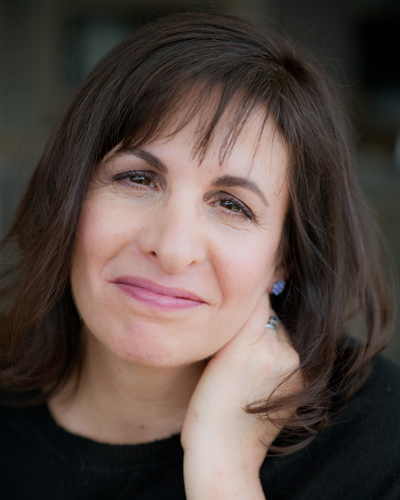 Jana Mohr Lone is the director and founder of the University of Washington Center for Philosophy for Children, an academic research center dedicated to research and practice in philosophy for children and philosophy of childhood, and she is an Affiliate Associate Professor of Philosophy at the University of Washington. Jana is the author of Seen and Not Heard (2021) and The Philosophical Child (2012). She co-authored the textbook Philosophy in Education: Questioning and Dialogue in Schools (2016) and co-edited the collection of essays Philosophy and Education: Introducing Philosophy to Young People (2012). Since 1995 she has taught philosophy in classrooms from preschool to college and beyond. A frequent writer and speaker about precollege philosophy, Jana is the founding president of PLATO (Philosophy Learning and Teaching Organization) and the founding editor-in-chief of the journal Questions: Philosophy for Young People. Follow her on Twitter: @JanaMohrLone