
On Friday the 4th graders at John Muir and I had a long conversation about personal identity. We also had some visitors from Nova High School, as well as one of the graduate students at UW working with us this year.
We read Philip Cam’s story, “Double Trouble,” about a robot, Algernon, who, one by one, has all of his parts replaced until none of his original parts are left. The robot company creates a new robot using all of the original parts, and a puzzle ensues. Which of the two robots is the real Algernon?
The students had lots of questions about which robot constitutes the real Algernon, and about the ethics of the company’s actions. They voted to begin our conversation with the question about whether the “real” Algernon is the robot who has gradually had his parts replaced, or the one who was created from all of the original parts. We had a really spirited discussion about this topic for over an hour, with students raising many issues about what makes the robot that particular robot (thoughts? memories? the same body?) and whether any of us really maintains the same identity over time. I told them the famous “Ship of Theseus” puzzle, and the students were quite divided over whether the ship that had had all of its planks replaced was still Theseus’ ship. And if it wasn’t, at what point did it cease to be Theseus’ ship? When one plank was replaced? Ten planks? Half of the planks? Three-quarters?
Eventually we ended up in a long discussion about whether, if I exchanged brains with one of the students, I would still be “Dr. Jana” or the student would have become Dr. Jana. Most of the students seemed to conclude that the student would have become Dr. Jana and I would have become the student, but several wanted to say that I would not be Dr. Jana or the student, but would become some third identity, with Dr. Jana’s body (minus the brain) and the student’s brain, because, as one student put it, “you would still have some physical instincts and ways of moving that were really Dr. Jana’s and not [the student’s].” What is it, then, that makes us the people we are? The students recognized that this is a really difficult and complex question.
It was a fascinating and really animated discussion, with many of the students in the class participating. The question about what makes us who we are and whether we remain that person despite significant changes seems always to inspire a meaningful and thoughtful conversation.
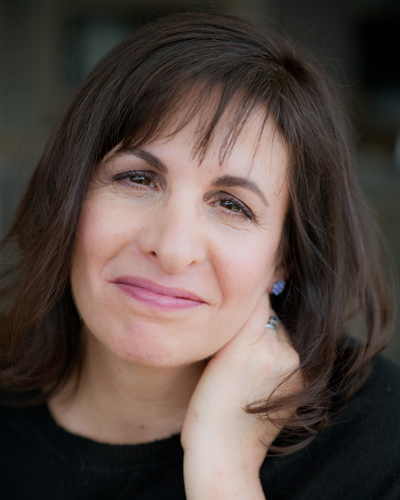 Jana Mohr Lone is the director and founder of the University of Washington Center for Philosophy for Children, an academic research center dedicated to research and practice in philosophy for children and philosophy of childhood, and she is an Affiliate Associate Professor of Philosophy at the University of Washington. Jana is the author of Seen and Not Heard (2021) and The Philosophical Child (2012). She co-authored the textbook Philosophy in Education: Questioning and Dialogue in Schools (2016) and co-edited the collection of essays Philosophy and Education: Introducing Philosophy to Young People (2012). Since 1995 she has taught philosophy in classrooms from preschool to college and beyond. A frequent writer and speaker about precollege philosophy, Jana is the founding president of PLATO (Philosophy Learning and Teaching Organization) and the founding editor-in-chief of the journal Questions: Philosophy for Young People. Follow her on Twitter: @JanaMohrLone