
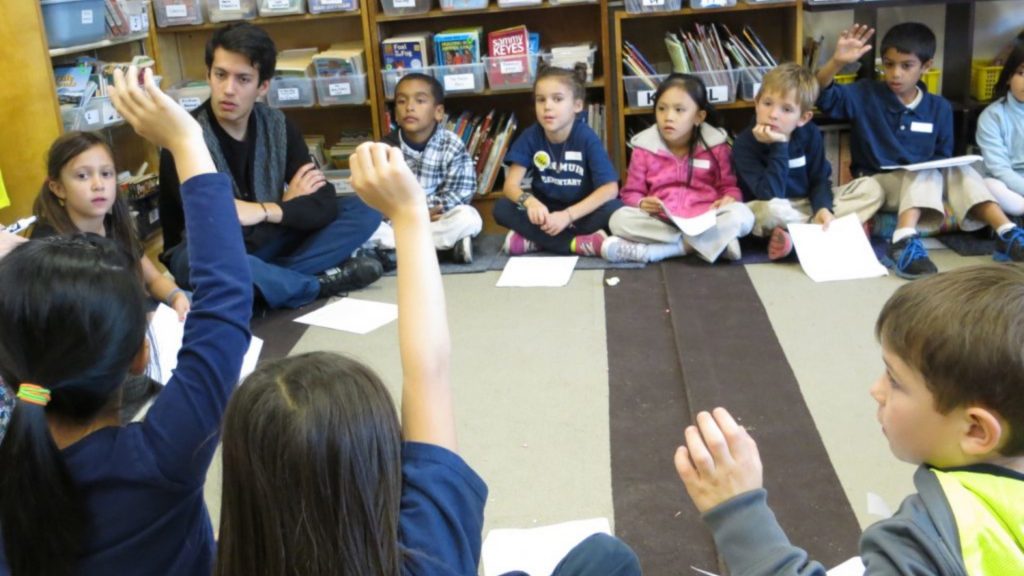
After 18 months, yesterday I returned to an elementary school to do philosophy with a class of 4th and 5th grade students. So wonderful to be in a physical classroom of children talking philosophy, masks and all, rather than through a screen!
This was the first time philosophy had been introduced to this group of students, so we began with a discussion about the meaning of philosophy and what we would be doing together this year. One student suggested that philosophy is “questions that are bigger than what science can handle at the moment.” Another said that philosophy involves “questions that have different perspectives.”
After our initial conversation, I asked the students to share something about themselves that they thought was important for other people to know.
Their responses included:
I have never seen my dad.
I care about people.
I am very very smart.
I like to read.
My parents are divorced.
I am stubborn but nice.
I love to cook and bake.
I have a skin condition.
I have a 4-week-old baby brother.
I like to draw.
I have a learning disability.
I play several instruments.
I am half Persian and half Bosnian.
I have three siblings.
I get bad headaches.
I can be crazy and calm at the same time.
I then asked the children whether, if this fact about themselves were no longer true, they would still be the same person. This led us into a lively conversation, with many students holding the view that you don’t remain the same person for very long, that as your interests and ideas change, you constantly become a different person. One child said that we are the people we are because of our experiences and that as we gain new experiences, we become new people.
Other students asserted equally strongly that we are always the same people. “You don’t change when your interests change,” said one child. “You are your personality and way of looking at things, not what you do or what you’re interested in.”
Another child responded, “But there are experiences that might change the person you are. If you lose a really close family member, it might change everything about you, your personality and how you feel and what you care about, maybe even how you look.”
“I care about people,” said another child. “That has led me to make friends and have experiences that I wouldn’t have had if I didn’t care about other people, and I think I would be a different person than the person I am.”
As is frequently the case, the conversation gave me many ideas to ponder, and new ways to think about the whole question of identity.
We ended by noting that there were at least two other interesting philosophical questions that emerged from their descriptions of what was important about them: What does it mean to be smart? Can you be crazy and calm at the exact same moment?
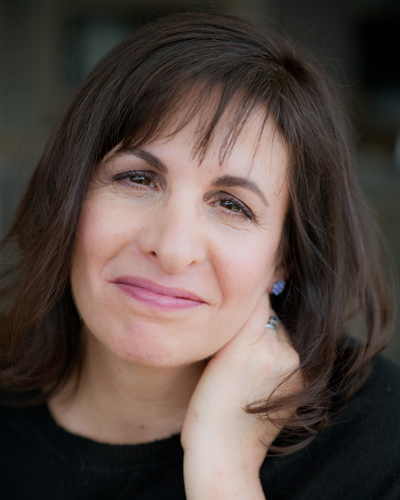 Jana Mohr Lone is the director and founder of the University of Washington Center for Philosophy for Children, an academic research center dedicated to research and practice in philosophy for children and philosophy of childhood, and she is an Affiliate Associate Professor of Philosophy at the University of Washington. Jana is the author of Seen and Not Heard (2021) and The Philosophical Child (2012). She co-authored the textbook Philosophy in Education: Questioning and Dialogue in Schools (2016) and co-edited the collection of essays Philosophy and Education: Introducing Philosophy to Young People (2012). Since 1995 she has taught philosophy in classrooms from preschool to college and beyond. A frequent writer and speaker about precollege philosophy, Jana is the founding president of PLATO (Philosophy Learning and Teaching Organization) and the founding editor-in-chief of the journal Questions: Philosophy for Young People. Follow her on Twitter: @JanaMohrLone