
I taught my first couple of elementary school classes in the last week, both with fourth grade students in Seattle. It is always amazing to me the level of philosophical interest and understanding shown by children. Yesterday I had a discussion with about 30 fourth graders about Plato’s “Ring of Gyges.” In our conversation, the children pointed out the dangers of the ring (thinking you might have more control over it than you do, the risks of it falling into the wrong hands, etc.). They also expressed their sense that you could think now that you know how you would behave if you had an invisibility ring, but really the way you would act if you were actually in this situation could turn out to be quite different than your predictions. We talked about the view that people behave morally only in order to avoid negative consequences if they do not, and the children generally asserted that they often behave in ways that seem morally good not because of the potential consequences if they don’t, but because they see themselves as certain kinds of people and being those kinds of people (trustworthy, loyal, kind, helpful, etc.) is important to them.
We also taught our first Philosophy for Children class at the University of Washington this week, and several undergraduates expressed their views that most children do start thinking early in their lives about the larger questions that underlie human existence, but there is typically no vehicle for exploring philosophical questions and along the way that part of many children’s selves fails to develop. We talked about how meaningful it can be to talk about questions like the meaning of life, what makes a life worth living, what success means, how we can know what’s right and wrong, who we are, etc., and the difference it can make in young people’s lives to examine these questions in an ongoing, collective way. We read Jon Muth’s story The Three Questions (which I’ve talked about in an earlier post), and each of the students wrote down the three questions that they think are the most important questions to which they would like answers.
Here are my three:
Why are we here?
Is time just a feature of human minds, and what is the objective relationship (if any) between past, present and future?
What happens when we die?
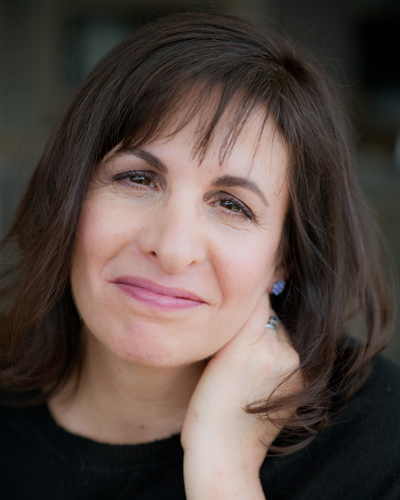 Jana Mohr Lone is the director and founder of the University of Washington Center for Philosophy for Children, an academic research center dedicated to research and practice in philosophy for children and philosophy of childhood, and she is an Affiliate Associate Professor of Philosophy at the University of Washington. Jana is the author of Seen and Not Heard (2021) and The Philosophical Child (2012). She co-authored the textbook Philosophy in Education: Questioning and Dialogue in Schools (2016) and co-edited the collection of essays Philosophy and Education: Introducing Philosophy to Young People (2012). Since 1995 she has taught philosophy in classrooms from preschool to college and beyond. A frequent writer and speaker about precollege philosophy, Jana is the founding president of PLATO (Philosophy Learning and Teaching Organization) and the founding editor-in-chief of the journal Questions: Philosophy for Young People. Follow her on Twitter: @JanaMohrLone