
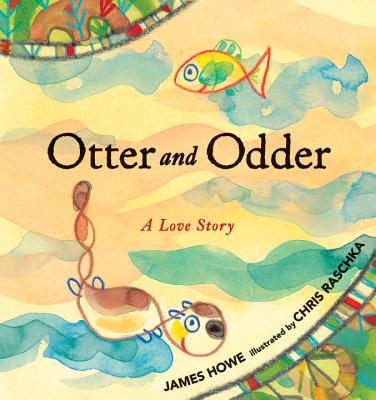
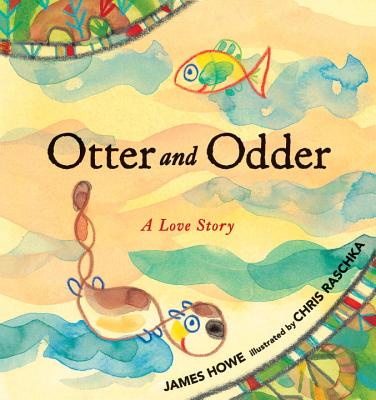
Otter and Odder, by James Howe, was introduced to me recently by one of my undergraduate students. The story is about Otter who, looking for food, falls in love with the fish he is about to eat. Told by his community that this is not “the way of the otter,” and characterized as “odd and getting odder,” Otter asks himself, “What is right? What is wrong? What is natural? What is the way of the otter?”
Can a fish love an otter, when the way of the otter is to eat fish?
The story inspires thinking about social norms and the forces that impact the way we understand the world, changing moral and social values, the meaning of community, what it means for something to be “natural,” the nature of love, and the relationship between individual desires and the demands of the community.
 Jana Mohr Lone is the director and founder of the University of Washington Center for Philosophy for Children, an academic research center dedicated to research and practice in philosophy for children and philosophy of childhood, and she is an Affiliate Associate Professor of Philosophy at the University of Washington. Jana is the author of Seen and Not Heard (2021) and The Philosophical Child (2012). She co-authored the textbook Philosophy in Education: Questioning and Dialogue in Schools (2016) and co-edited the collection of essays Philosophy and Education: Introducing Philosophy to Young People (2012). Since 1995 she has taught philosophy in classrooms from preschool to college and beyond. A frequent writer and speaker about precollege philosophy, Jana is the founding president of PLATO (Philosophy Learning and Teaching Organization) and the founding editor-in-chief of the journal Questions: Philosophy for Young People. Follow her on Twitter: @JanaMohrLone