


In the book I’m currently writing, I have been working on a chapter about children’s particular strengths. Our society generally has such a deficit view of childhood, but children also exhibit abilities that adults often strive to recapture. To point out a few examples, children tend to have a strong sense of wonder, vibrant imaginative capacities, a heightened awareness of the world around us, and an ease with vulnerability. As adults, we work to cultivate these childlike qualities, to keep alive our wondering, questioning selves, nurture our imaginative capacities, pay more focused attention in our daily lives, and to be more open to genuine encounters with others. Yet we don’t seem to recognize that children are sources of wisdom for revitalizing these aspects of ourselves.
Children exhibit a capacious capacity for wonder, viewing the world through new eyes and appreciating the mysteries at the heart of life. A strong sense of wonder leads to a willingness to be surprised, to approach the world with a sense of astonishment. This is sometimes referred to as “beginner’s mind,” where we see what is around us with a fresh perspective. Watch a four-year-old in a spring garden, looking with wide eyes at flowers growing out of the ground. Or listen to the “why?” questions of a five year old, seeking to understand the world around her.
Search “childlike wonder” online and you will find thousands of pages devoted to helping adults “regain their childlike wonder.” Few of these pages, however, suggest that adults should seek the help of children. Yet children often are experts in viewing what is around them, even the simplest things, with wonder.
When wonder is articulated, it is often through questions, and children’s questions demonstrate a keen awareness of life’s preciousness and fragility. When I recently asked groups of nine and ten year old students what they thought were life’s most important questions, their responses included:
Why are we alive?
Who made God?
Is there a universe beyond the universe?
What happens when we die?
Could the world ever end?
What will happen to the world in 20 years?
What makes someone love you?
What is the right thing to do?
Will I be what I want to be when I grow up?
Do my friends like me?
What is space made of?
What is the meaning of life?
Do I matter?
Will people remember me?
I will be writing posts here much less frequently this academic year, as I am trying to get this book written!
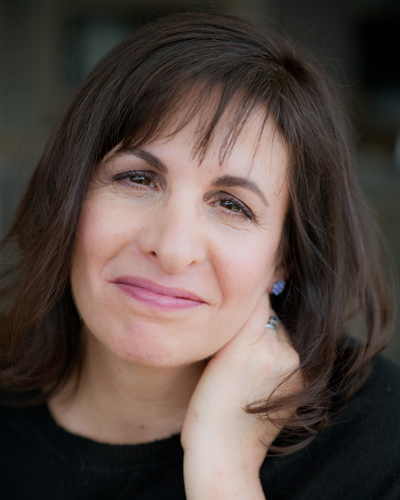 Jana Mohr Lone is the director and founder of the University of Washington Center for Philosophy for Children, an academic research center dedicated to research and practice in philosophy for children and philosophy of childhood, and she is an Affiliate Associate Professor of Philosophy at the University of Washington. Jana is the author of Seen and Not Heard (2021) and The Philosophical Child (2012). She co-authored the textbook Philosophy in Education: Questioning and Dialogue in Schools (2016) and co-edited the collection of essays Philosophy and Education: Introducing Philosophy to Young People (2012). Since 1995 she has taught philosophy in classrooms from preschool to college and beyond. A frequent writer and speaker about precollege philosophy, Jana is the founding president of PLATO (Philosophy Learning and Teaching Organization) and the founding editor-in-chief of the journal Questions: Philosophy for Young People. Follow her on Twitter: @JanaMohrLone